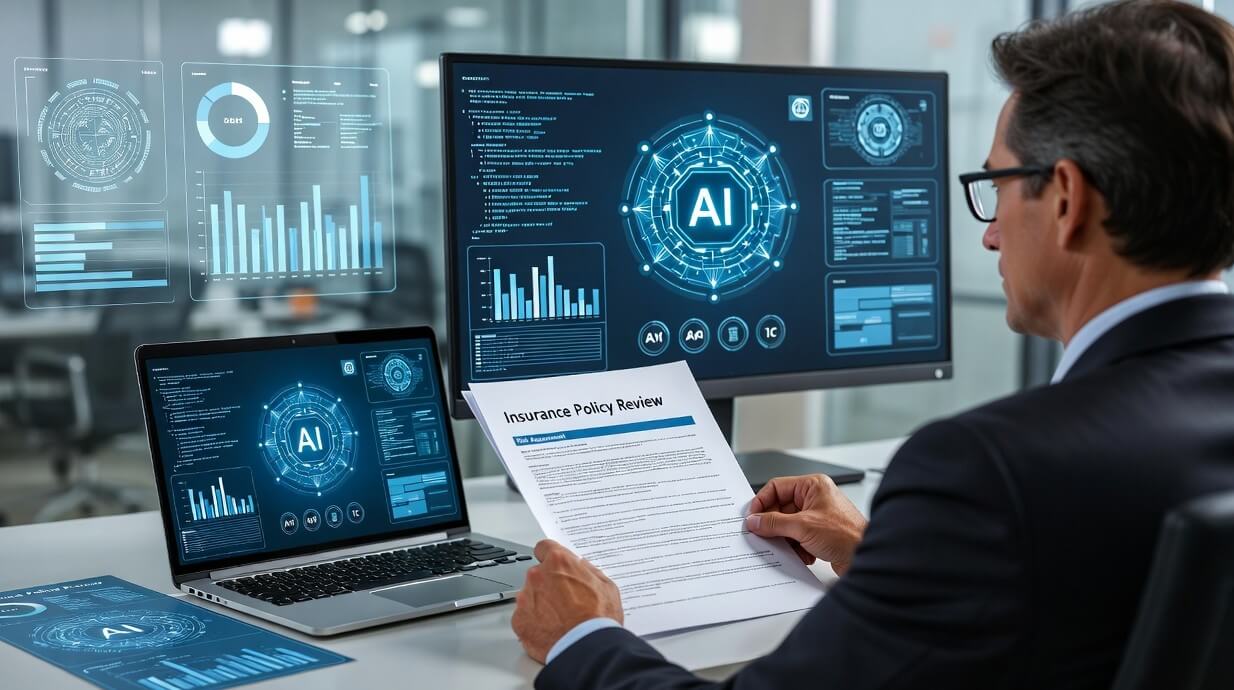
Artificial intelligence is now entering normal business processes. From automated customer service to predictive analytics, businesses are progressively utilizing AI to decide faster and more efficiently. These tools are as useful as they are; however, they also come with another type of risk that has not yet been completely thought of by many organizations.
One important question businesses are beginning to ask is: Does Your Policy Cover AI Errors? Tech Risks Explained is no longer just a technical discussion; it’s a legal and financial one as well. Traditional insurance policies were not originally designed with AI-driven mistakes in mind. As technology evolves, companies must understand where their coverage begins and where it stops.
Why AI Errors Are Becoming a Business Risk
Artificial intelligence systems are educated by statistics and trends. This makes them powerful but at the same time they are likely to be wrong in case the data is incomplete, biased and misinterpreted.
In contrast to mere technical issues in software, AI mistakes may interfere with decision-making. As an example, the algorithms may fail to categorize the information correctly, give inaccurate predictions, or give misleading results.
Such risks may have the following effects:
- Operational disruptions
- Incorrect automated decisions
- Compliance issues with regulations
- Data handling concerns
Due to the fact that AI systems tend to be self-reliant, defining the person on whom one should hold accountable for a mistake can be complex. It is at this point that insurance and risk management dialogues begin to count.
Read more about Cannabis Insurance here!
Understanding What Traditional Policies Usually Cover
Many businesses assume their existing technology or liability policies will automatically cover AI-related problems. However, that isn’t always the case.
Traditional policies generally focus on risks like:
- System failures
- Data breaches
- Cyberattacks
- Network downtime
AI errors, on the other hand, often fall into a gray area. If an algorithm produces incorrect outcomes but the system technically worked as intended, insurers may view the issue differently from a standard software malfunction.
This is why companies reviewing “Does Your Policy Cover AI Errors? Tech Risks Explained” are starting to realize that standard coverage may not fully address modern technology risks.
Key Technology Risks Linked to AI Systems
With the increased use of AI, some distinct categories of risks are emerging.
1. Algorithmic Bias
AI models are taught based on past information. In case of such bias in that data, the system might generate unwittingly unfair or incorrect findings.
2. Automated Decision Errors
Numerous organizations automate their processes by using AI, such as approvals, predictions, or recommendations. When the system produces wrong output, the effect may spread throughout the workflow.
3. Data Integrity Problems
Data quality is important to AI systems. Poor quality, old, or incomplete data may result in poor quality outcomes.
4. Regulatory and Compliance Risks
Artificial intelligence technologies are becoming more regulated by governments. Companies need to make sure their systems are in line with the new standards regarding transparency and accountability.
Get the best business, commercial, liability, and custom coverage from Summit Insurance Kelowna!
Why Businesses Should Review Their Risk Coverage
Even though AI tools offer significant benefits, they also shift how companies manage responsibility.
Reviewing technology policies helps businesses:
- Identify potential coverage gaps
- Understand liability boundaries
- Prepare for emerging regulatory requirements
- Build stronger digital governance strategies
Risk management today isn’t just about cybersecurity; it’s about understanding how automated systems influence business outcomes.
How Organizations Can Reduce AI-Related Risks
The insurance is not the only piece of the puzzle. It is also important that businesses pay attention to the internal practices that would minimize the likelihood of errors related to AI.
Some of the strategies to be used are:
- Periodic auditing of AI models and data.
- Incorporation of human control over automated decisions.
- Ongoing monitoring of system performance.
- Recording the way AI is being trained and implemented.
Through policy awareness and responsible AI practices, organizations will be in a better position to cushion themselves against challenges they have not anticipated.
Final Thoughts
With artificial intelligence becoming the new business infrastructure, the capacity to manage risk has to change with it. The Question: “ Does Your Policy Cover AI Errors? Tech Risks Explained” has been a change in the way businesses perceive the issue of technology liability.
The AI-based systems can open up some robust opportunities, yet they also bring about the complicated roles that the old policies might not be well-equipped to mitigate. Being aware of such risks and regularly seeing if they are insured can serve as a way for organizations to remain organized in a more highly automated world.
In the case of companies that must work through the digital transformation, staying up-to-date on the risks posed by technology is no longer a choice. It is just a part of creating a strong and future-oriented organization. For more guidance, visit Summit Insurance!